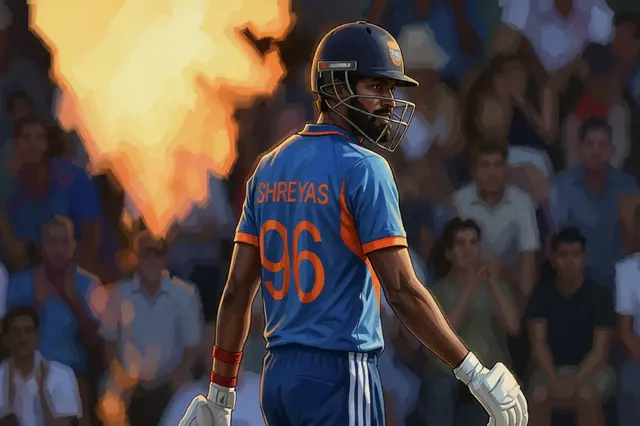

Radha Yadav: WPL’s High-Octane Standard Forces Indian Women’s Cricket to Evolve

Published 2026-11-25 · By Nandini Menon (Senior Features & Tournament Writer · Hyderabad Desk)
The scoreboard read 184/4 by the death, but nobody on the Hyderabad ground was smiling. It was a raw, ugly wicket—skiddy hard length that turned the new ball into a slingshot. Radha Yadav, stepping onto the tarmac after her warm-up, didn’t look at the pitch report. She looked at the dew. That’s the WPL conditioning kicking in. The humidity at Chinnaswamy after 8:30 PM IST makes the leather slick, but the domestic game still relies on old-school, slow-pitched adjustments. Yadav doesn’t adjust slowly. She adjusts instantly. The new ball did the talking. No one in the dugout bought the 'conditions' excuse.
The Drying Gap Between Domestic and Pro Leagues
For a decade, the Ranji grind was the only real measure of a player's mettle. You survived the 4-day slog, you survived the red-soil track that swallowed the ball in the fourth day, and you were a good player. Now? The bar is different. Radha Yadav, speaking from the Telangana desk, makes a point that has been echoing in every dressing room from Nizam Stadium to the Chinnaswamy. The WPL hasn't just added another trophy to the shelf; it has rewired the brain. The gap between the domestic circuit and the international, high-gloss professional leagues has bridged itself, not through a slow trickle, but through a sudden, violent shock. Players who spent five years perfecting their defensive block on a damp, slow wicket now have to survive 20 overs in a professional, high-pressure environment where the Impact Player gamble changes the trajectory of the entire match.
It’s about boundary-percentage. In the domestic setup, a 50-60 run score with a solid strike rate gets you the contract. In the WPL, if you don't strike at 130-plus, you are a liability. The pressure isn't just on the shoulders; it’s in the feet. The footwork on a professional surface, with professional coaching backing every net session, is simply not the same as what we see in the average domestic final. Yadav sees this shift as a necessary pain. It hurts the older generation of domestic players, the ones who got comfortable with the 'good enough' mindset. But it forces the young ones—the 18-year-olds grinding it out in the state associations—to up their game.
"We used to think international cricket was a different planet. Now, the WPL is the stepping stone. You can't survive the pressure of a sold-out arena, a high-scoring chase, and the sheer pace of the bowlers without fundamentally changing how you play domestic cricket," Radha Yadav told the desk, her voice steady but firm.
The Nadoz Live Casino India Context
Let's be real. The rise of the WPL is a business story as much as a sporting one. The money is flowing. Sponsorships are scaling up. And with that money comes a new ecosystem. We are seeing a surge in digital engagement, with platforms like Nadoz Live Casino India becoming part of the broader conversation around sports betting and entertainment in the country. It’s a double-edged sword. For the player, it’s a massive paycheck. For the sport, it’s a potential trap. If the focus shifts too hard to the 'casino' side of the entertainment, do we risk losing the soul of the game? The dressing room talk is clear: the money is a motivator, but the respect of the peers is what keeps a player sane. The young girls coming out of the state associations are hungry, but they are also savvy. They know the value of their brand. The WPL has given them a platform to be stars, not just athletes.
Why the Middle-Overs Choke Keeps Happening
The biggest tell is in the middle overs. You can tell the domestic players from the WPL players by looking at their back foot. On the skiddy tracks, the domestic batter plays defensively, leaving the ball on the bat, relying on the pitch to do the work. The WPL-trained batter, however, is looking for the gap. They have faced the pace of the best Indian fast bowlers in a professional setting. They know the skiddy hard length coming. They adjust the back foot earlier. They are more proactive. It’s a subtle difference, but it’s the one that separates a 'good' batter from a 'great' one. The Ranji grind is still essential for character, but the WPL is the essential for skill. We are at a fascinating intersection. The domestic game is going to get faster, sharper, and more aggressive. The red-soil track is going to have to survive the pressure of professional footwork. And that, for me, is the most exciting part of Indian cricket right now. The gap isn't just bridged; it's being blown apart.
The evening humidity at Brabourne or the sharp contrast at Chinnaswamy is no longer just a weather report. It’s a tactical weapon. And the players who are using it? They are the ones who spent last season in the WPL. The shift is complete. The question is no longer if the WPL will change the domestic game, but how quickly the rest of the system will catch up. It’s a race now. And the clock is ticking.

Updated 2026-11-25 · Instant Rupee Deposits & 60s Withdrawals · 24/7 Support.
Access Official NadozCafe Portal →Mobile Gaming & UPI Fintech Editor · Pune Desk
Arjun Sen benchmarks mobile sports platforms, Android APK performance, and instant UPI payment rails from Pune. He writes NadozCafe's weekly verification column on nadoz live casino india.
Reader Discussion & Match Reactions (2)4.8★ Community (2 Comments)
Verified Indian cricket reader perspectives & tactical debate on nadozcafe.com
Yadav's dew-focused adjustment is exactly why I'm dropping openers and loading up on impact players in the final overs. The 184/4 score signals huge fantasy points for bowlers who can grip the slick surface. I'm stacking my XI with all-rounders who bowl death overs at Chinnaswamy this week.
The skiddy hard length mentioned makes traditional slow-pitch adjustments useless for domestic players entering WPL. I predict teams will shift to aggressive fielding rings near the boundary ropes to contain the slingshot effect. The toss winner will definitely bowl first to exploit that early humidity window.